
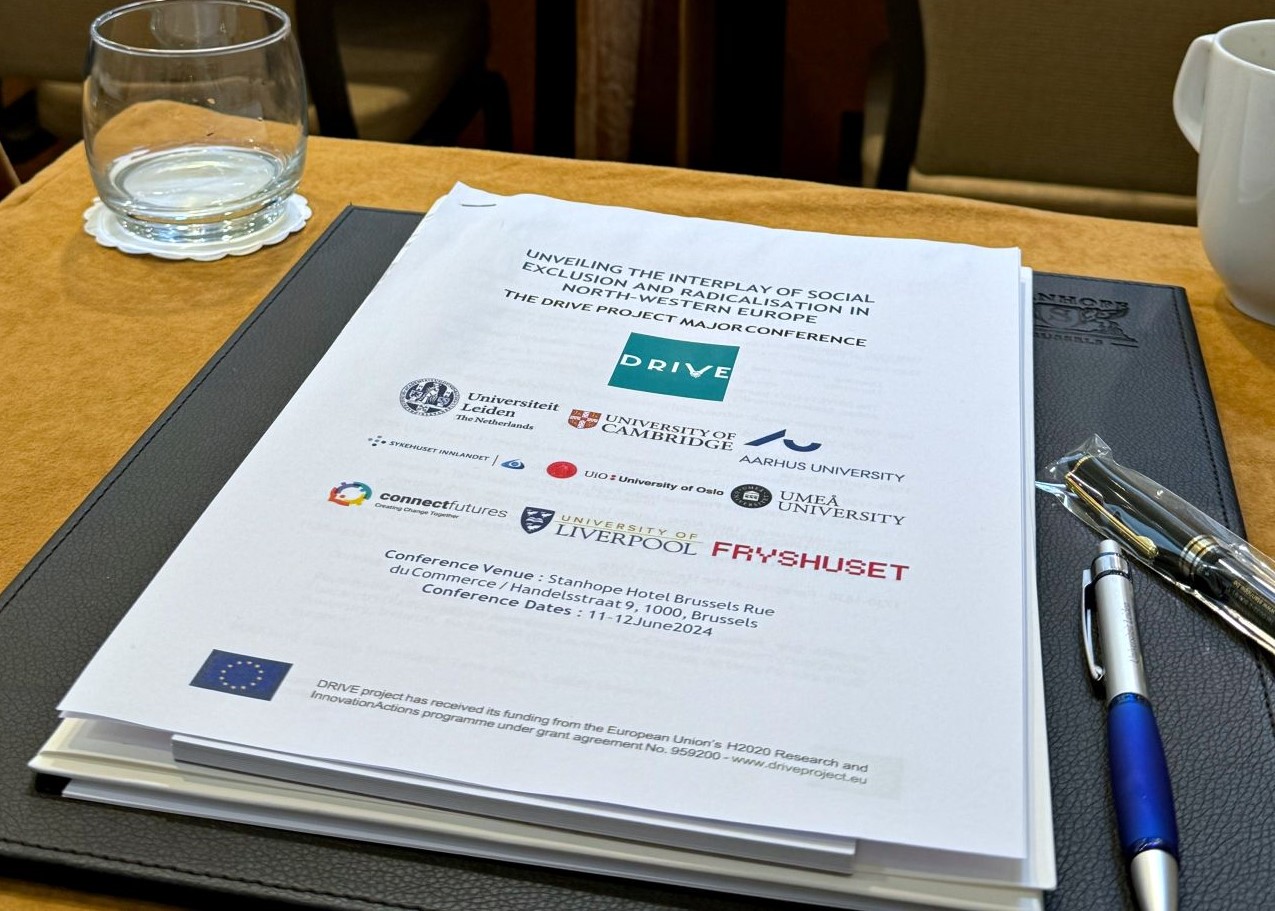
The ground-breaking project DRIVE, which receives funding from the European Union, recently held its main conference in Brussels, Belgium, on 11-12 June 2024. The two-day event brought together a diverse audience from across Europe, including scholars, policymakers, practitioners, and community groups representing various disciplines such as the social sciences, humanities, and medical sciences. The conference aimed to foster meaningful exchanges and challenge conventional thinking about radicalisation, which often overemphasises the role of ideology while neglecting the complex interplay of psychosocial, structural, and cultural factors that contribute to the marginalisation of individuals.
One of the key themes that emerged from the conference was the need to shift the narrative surrounding radicalisation. Many speakers argued that the current discourse tends to focus disproportionately on the ideological dimensions of radicalisation, such as extremist religious or political beliefs. While ideology undoubtedly plays a role, this narrow focus can obscure the deeper social, economic, and psychological factors that render individuals vulnerable to radicalisation in the first place.
Several presentations highlighted the importance of addressing the structural inequalities and systemic barriers that contribute to the marginalisation of certain communities. Factors such as poverty, discrimination, lack of access to education and employment opportunities, and social exclusion can create a sense of alienation and disillusionment, making individuals more susceptible to extremist narratives that promise a sense of belonging and purpose.
Moreover, the conference emphasised the need to recognise and appreciate the resilience and agency of those at the margins of society. Too often, marginalised individuals are portrayed as passive victims or potential threats, rather than as active agents with the capacity to resist and challenge extremist ideologies. By supporting and empowering these individuals and communities, we can help build resilience and counter the pull of radicalisation.
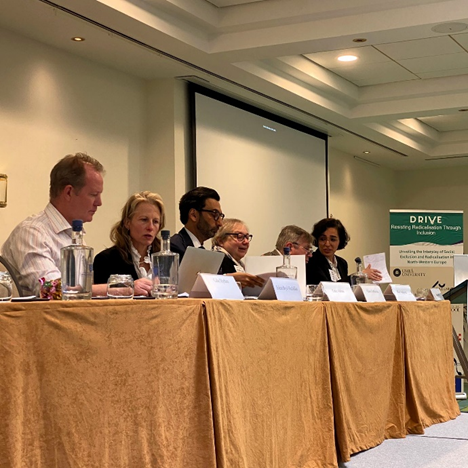
Another key takeaway from the conference was the importance of interdisciplinary collaboration in addressing radicalisation. The complex nature of the phenomenon requires input from a wide range of disciplines, including psychology, sociology, anthropology, political science, and more. By bringing together experts from diverse fields, the DRIVE Project Conference facilitated the sharing of knowledge and best practices, fostering a more holistic and nuanced understanding of radicalisation.
The DRIVE Project Major Conference in Brussels represented a significant step towards challenging conventional thinking about radicalisation and promoting a more nuanced and compassionate approach to the issue. By recognising the complex interplay of factors that contribute to marginalisation and vulnerability, and by empowering and supporting those at the margins of society, we can build more inclusive and resilient communities that are better equipped to resist the lure of extremism. The insights and recommendations that emerged from the conference will undoubtedly shape future research, policy, and practice in the field of radicalisation prevention and counter-extremism efforts across Europe and beyond.
Introduction
In today’s digital age, online spaces have transformed the way in which people communicate. The internet has been a sort of breeding ground for radicalization, often fostering echo chambers and hosting fringe communities. Exploring the dynamics of these virtual environments, this blog piece explores themes surrounding extremist messaging, information dissemination, and online spaces through speaking with Anna George, a scholar at the University of Oxford specialising in online political behaviours. We speak about fostering digital resilience in an era of misinformation and disinformation and how online spaces can be both a place for mobilizing and minimizing extremism.
During my time at the DRIVE project, I was able to overlook the myriad way polarisation and existence on the fringes can drive exclusion and extremist views. How and why are people increasingly disenchanted with the world around them? How can online spaces specifically provide solace or further divide us?
Background and context
I had the opportunity to speak with and interview Anna George, a Social Data Science scholar at the Oxford Internet Institute researching online political behaviours and computational approaches to studying online harms. As she finalises her doctorate, her research has largely focused on the transmission of harmful messaging, online communities, alternative news, and extremist sentiments. Her ambitions rest on making the internet a safer space.
Mainstream social media and alternative spaces
We delved deep into our discussion, examining trends in low-quality news sources, the framing of COVID-19, the Ukraine war, climate change, and migration in extremist online spaces. What Anna’s research has been noticing is that as movements become more mainstream, they are more likely to mobilise offline. Online spaces allow people to meet other like-minded people. This can be as innocent as joining your local knitting club; however, due to the vast nature of the internet, it can quickly become more sinister. Extremist people and organisations both exploit and use the ease of the internet to broaden cross-sections of individuals who might share common views, facilitating radicalization or providing communities where extremist sentiments can be freely shared. While individuals associated with extremist ideologies use and interact with virtual spaces for several reasons, such as the community and feeling of inclusion, Anna points out examples of when groups and lone actors can mobilise and move offline. With examples such as the attack in Charleston, USA, the Capitol Insurrection, and even her local environment of Oxford climate change conspiracy networks, we can analyse groups that used to be sparse becoming to morph together. Anna marks QAnon as a landmark turning point for rallying conspiratorial groups together, representing a conspiracist milieu lying adjacent to other extremist beliefs capable of violent goals, such as the New World Order or the Great Replacement theories within white supremacist spaces. However, what is pointed out throughout our interview is the need to emphasise not only the capabilities of violence but also the detrimental effects of the dissemination of online disinformation through diverse supporters. What we can observe is the potentiality of conspiracy theories “going mainstream” through creating subcultures, boosting alternative media, persuading the masses, and proxy wars, all of which have political effects.
Conspiracy narratives: trust, COVID-19, and anti-institutional extremism
As we continue our discussion, we land on a central insight in researching online spaces and why people are increasingly turning to extremist spaces: trust. Over the past 50 years or so, public trust in institutions and the news media has collapsed. The consumption, distribution, and production of news have altered thanks to the digital era and social media. This isn’t necessarily a phenomenon touching solely conspiratorial people; a lot of people are starting to lose trust in democratic governments. Anna emphasises this as a major gateway into foreign state entities playing into these claims, as at the core of extremist ideals, there is the perception that you can’t fully trust the government. We discuss the effects that misinformation online has on undermining public trust. Anna continues in saying “it is political, because the topics that are discussed are political issues: lockdown, climate change,” stating the US to be the best example of this, while the trend is beginning to increase in the UK political sphere. The effects of this point to the weaponisation of topics.The COVID-19 pandemic sparked a feeling of alienation and mistrust in institutions. The uncertainty around COVID brought a lot of questioning and fear, with corresponding measures taken by governments heightening anti-government action in Europe. Low-quality news outlets and fringe movements used over-reporting on issues like vaccine hesitancy to spread anti-institutional sentiments, much of which spilled over onto mainstream social media. This environment was one that conspiracies could thrive in, as Anna points out that trends in conspiracies increase with uncertainty. This provided an opportunity for extremist groups to spread disinformation, gaining exposure and recruitment benefits.
Accountability and Policy Initiatives: Turning Points and Lessons Learned
The topic delves into the incentives and stakes that actors and governments have in information sharing and online spaces. Anna contends that there remains a lot of confusion around this landscape and that the issue of online safety and its effects on the rise of domestic terrorism is a paramount policy avenue. We must continue to fund and research the impact of these movements, as well as the reasons why mistrust in governments and institutions is on the rise as extremist movements, populist movements, and foreign state media benefit from these narratives. She continues, calling for a multipronged approach among governments, social media companies, and civil society, drawing engagement from an educational standpoint in order to teach young people, in particular, the importance of online literacy and critical thought. In her own work, Anna performed a systematic review of computational approaches, offering methods and techniques social media companies can utilise in combating misinformation and disinformation. Interventions such as content-labelling (as true or false, trustworthy) or fact-checking videos can prime users into questioning the accuracy of content in order for people to discern for themselves the validity of sources. The UK government's Online Safety Act (2023) is a great example of a government’s novel approach to enforcing measures to improve online safety and the duties of internet platforms in managing harmful or illegal content.
Closing thoughts
While we covered a wide range of topics during our meeting, it is without a doubt an area of research that academics such as Anna George should push towards creating safer online and critical spaces. Topics of mistrust and disinformation regarding online spaces can aid us in gaining insight into the role of social exclusion and emotions regarding why individuals are attracted to these movements or exploited or recruited into movements through intersections of beliefs; perceptions are powerful.
In recent years, the Netherlands has frequently been confronted with public incidents of Islamophobia. It is essential to address this issue by finding solutions that promote inclusivity and respect for diversity. This article aims to explore key aspects of Islamophobia in the Netherlands, introduce strategies to combat it and build a more inclusive society.
Dutch Islamophobia on Recent Display
In 2019, the Netherlands passed a law banning burqas and niqabs in public spaces, along with other face coverings traditionally worn by religious Muslim women. According to Dutch lawmakers, the law was intended to promote security and facilitate greater communication in government buildings, hospitals, and schools. If caught violating the law, citizens are subject to a 150-euro fine.
Though the law also prohibits garments like ski masks and full-coverage helmets, it clearly targets Muslim women and others wearing religious garments, who are already vulnerable to discrimination given their minority status in Western countries. Despite the fact that it has gone largely unenforced, people of faith have reported higher incidences of discrimination, which is why international rights groups across the globe have criticized legislation of this nature.
The Dutch government does not register self-identified religious affiliations among its population. Even so, the European Network Against Racism estimates that 4.9 percent of the adult population in the Netherlands is Muslim. When surveyed, Muslims in Amsterdam voiced their concern that Islamophobia is “becoming increasingly normalized in Dutch society,” with the burqa ban serving as just one example of this. It should be a priority for the Dutch government, then, to ensure the safety of this especially vulnerable population.
Islamophobia has become far more prevalent following the events of September 11, which (unjustly) established for many the link between Islam and the risk of violence. Though scholarship on radicalization has existed for decades, it has become much more of a focal point following the events of 9/11. In fact, the UN reports that discrimination against Muslims sharply increases around terrorist attacks and the anniversaries of such attacks.
The Dutch History of Islamophobia
During the 1960s and 1970s, the Netherlands began recruiting labor from elsewhere, mostly from Morocco and Turkey, along with former Dutch colonies Suriname and Indonesia. Prior to this demand for labor, the Muslim population accounted for less than 0.1% of the Dutch population.
As the MENA region struggled with tensions and conflicts in the following decades, the Netherlands saw numerous waves of migrants, including laborers and asylum seekers. This was further amplified during the migration wave of 2015, which has impacted the way most European countries handle migration issues. The fact that many migrants come from nations where Islam is the most prevalent religion complicates the fact that 42% of discrimination reports in the Netherlands are (allegedly) related to migration rather than religion.
Since 2015, the European integration of migrants has become a significant challenge, often met with resistance from leaders on the right and many European citizens, including people in the Netherlands. Quotes like the following from Geert Wilders, leader of the Dutch right-wing Partij voor de Vrijheid (PVV, Party for Freedom), have been reiterated across Europe for the last two decades.
“Politicians from almost all establishment [parties] today are facilitating Islamization. They are cheering for every new Islamic school, Islamic bank, Islamic court. They regard Islam as being equal to our own culture. Islam or freedom? It doesn’t really matter to them. But it does matter to us. The entire establishment elite—universities, churches, trade unions, the media, politicians—are putting our hard-earned liberties at risk.”
Political Discourse and Discrimination
Political discourse plays a critical role in shaping public opinion, which is precisely why discriminatory and inflammatory rhetoric can be so harmful. Rhetoric like that of Geert Wilders has contributed to a climate of Islamophobia in the Netherlands, leading to negative opinions about minorities and increased discrimination against Muslims. For instance, he has referred to Islam as a "totalitarian ideology," called for a ban on the Quran, and advocated for the closure of mosques across the Netherlands.
According to a 2019 report by the Dutch Human Rights Institute, discrimination against Muslims in the Netherlands increased by 10% in 2018 compared to the previous year. The recent increase in hateful political discourse may be one key piece to understanding why Islamophobia is now more prominent within Dutch society.
The impact of political discourse on discrimination against Muslims is not limited to the Netherlands. Similar trends have been observed in other parts of Europe and the United States. For instance, in the United States, former President Donald Trump's anti-Muslim rhetoric contributed to an increase in hate crimes against Muslims, especially surrounding his executive order banning travel from parts of the Arab world in 2017. Though the speech of politicians may not directly incite discrimination or violence, increasingly repetitive hateful rhetoric has the power to transform public opinion, amplifying and exacerbating existing discrimination, especially targeting already vulnerable communities.
Media Depiction: Reframing Muslim Identity
The media also plays a crucial role in shaping public opinion and attitudes toward Islam and Muslims. Unfortunately, in the Netherlands, media coverage of Muslims has often been stereotypical, negative, and sensationalized, further normalizing Islamophobia within society.
One common stereotype in the media is the portrayal of Muslims as intolerant and dangerous, as the media often focuses on acts of terrorism or radicalization. Muslim voices are often absent from public discourse, but when they are featured, they are portrayed as perpetrators or victims of violence.
Additionally, Muslim religious practices/beliefs are depicted as incompatible with Dutch values and norms. This portrayal creates a climate of fear and suspicion among non-Muslims in the Netherlands and elsewhere, marginalizing and stigmatizing Muslim communities and creating a sense of alienation and exclusion.
To address this issue, media organizations should be more inclusive and representative in their coverage of Muslims. Journalists should seek out diverse perspectives and voices, presenting a more nuanced and accurate portrayal of Muslim communities in the Netherlands. Media organizations should also be held accountable for spreading false or discriminatory sentiments about Islam and Muslims.
Additionally, it is essential to acknowledge consumers’ role in the issue, as they should be aware of the potential biases and prejudices in media coverage and seek out a variety of information sources. Tis is precisely why education is a crucial component of addressing media coverage of Muslims. Educational institutions should promote media literacy and critical thinking skills, encouraging young people to analyze media coverage and identify biases and stereotypes. By promoting more accurate and unbiased media coverage, we can equip ourselves to combat Islamophobia and foster a more inclusive and tolerant society in the Netherlands.
Prioritizing Intersectionality
People in the Netherlands and other Western nations face numerous sorts of prejudice based on the intersection of their identities including race, gender, sexuality, religion, socioeconomic status, physical ability, and more. These identities are relational rather than distinct from one another in the context of discrimination.
While adjudication of discrimination often considers single-issue prejudices, discrimination more often takes place on the basis of multiple factors like race and gender, for example. In other words, people experience discrimination differently depending on their overlapping identities.
The term's use has drawn opposition from conservatives all over the world because they typically feel victimized by it. American political commentator Ben Shapiro, for example, considers it a “hierarchy of victimhood,” in which white men would rank at the very bottom. This becomes a problem for those who fear losing their current ranking or status within society.
Instead, society should focus on empowering and uplifting those who need it most, those whose identities overlap, creating what researchers have called a “cocktail of oppression.” When combating the prevalence of Islamophobia in society, intersectionality must be central to the discussion.
Dismantling Stereotypes, Facilitating Interfaith Dialogue, and Promoting Inclusion
While there are certainly ways to minimize the prominence of Islamophobia in society, it is essential to understand that unconscious biases will always exist in modern society. We can work to be more aware of them, challenge our pre-existing beliefs, and surround ourselves with diverse perspectives. The road ahead is long, but there is no doubt it is worthwhile. The following steps are just a few of many that can be taken to address Islamophobia in the Netherlands.
The first is to increase the representation of marginalized communities in the media and popular culture and to listen to Muslim voices. Ideally, these voices should represent a diverse set of beliefs and perspectives, making Muslims feel seen and understood while simultaneously helping non-Muslims. understand cultures, beliefs, and practices that differ from their own. Media representation can provide a more complete and nuanced understanding of minorities and other vulnerable groups.
It is also important to collect and analyze data in a more nuanced manner. The Netherlands does not collect data on religion in particular, but it should be careful about generalizing those who migrated from the MENA region. Danish policy, for example, openly collects data on all “non-western” immigrants. The act of separating data in this way risks increasing discrimination within society. The UN Committee criticized Denmark’s efforts against discrimination as their data collection methods marginalize non-natives from particular regions of the world, sweeping them into a general “other” category. While the Netherlands does not make a distinction between Western and non-Western migrants, there is room for improvement. The Netherlands can learn from the Danish example by collecting data on varying populations equally.
Dutch society must also make an effort to accommodate Muslims in everyday spaces, so practices like prayer or fasting no longer seem strange or particularly novel. One way to do this is to incorporate prayer spaces in workplaces, schools, and other frequently visited buildings. This enables Muslims to steadfastly practice their faith in a setting where their peers support them. It may also be helpful to educate students or employees during the month of Ramadan so their Muslim colleagues feel supported and empowered if they choose to fast. Intercultural education promotes mutual understanding and respect between different cultural and religious communities.
Interfaith dialogue plays a key role in exposing groups to other cultures and, more generally, facilitating a peaceful European integration process. There are numerous initiatives throughout Europe that aim to promote dialogue among groups that are traditionally misunderstood or in conflict with one another. The Hague Peace Project is one example of this, as they host a Turkish-Kurdish work group among others that have created a steady flow of projects and events stimulating interaction and peaceful dialogue between these diaspora groups in the Netherlands. Their work encouraging dialogue about human rights and diversity as part of the Muslim identity has undoubtedly created change in the city.
Final Takeaways
As a final note, it is crucial to make the distinction between equality and equity, considering actionable plans to achieve each in a variety of settings. Equitable actions help achieve long-term equality in society. Equal opportunity and access to resources are often not enough for a society with a history of colonialism and inequality. There is no doubt the Netherlands has a complicated history and has been tasked with new challenges in the twenty-first century, but these actions would set the country on a path leading to greater inclusion and understanding of cultures.
The Drive project was launched in January 2021 to help the project’s researchers understand the relationship between views that might be understood as ‘radical’ and the structural factors that may be connected to them, including space, place, identity, and structural exclusion. At the time when the project was first conceived, there were concerns, especially, about two forms of radicalism: the various forms of ideology that can be described as ‘Islamism’, and the forms of ideology that can be described as ‘far right’. Both terms, ‘Islamism’ and ‘far right’, are difficult, as very few people or organisations describe themselves in this way. Even so, the terms are widely used in general discussions, and point towards particular types of ideologies, even if they do not define them satisfactorily.
The project initially focused on the groups among whom such ideas might arise: Muslims in the case of ‘Islamism’, and particular types of non-Muslims for the ‘far right’. Our initial idea was that the individuals within these groups who would be best able to contribute to the project were those who were in some way or another close to organisations or milieus that were avowedly Islamist or far right. Because we were interested in structural factors and not actual extremists, we set out to interview people in the ‘grey zone’ near such organisations and milieus, not actual extremists.
What we found was that organisations and milieus that are avowedly Islamist or far right are even fewer than we expected. Although there are plenty of government agencies interested in people who are moving towards Islamism or the far right, such people are often hard to identify and difficult to access. The decision was therefore made to broaden the types of people we were interviewing. We are now looking to interview a broader range of Muslim minority and ethnic majority participants to explore the ways in which marginalisation, exclusion, and discrimination impact how people see themselves and others in the context of wider issues of polarisation and social conflict, which in some cases can lead to the radicalisation of the few. Any of the non-Muslims who vote for or support political parties that emphasise opposition to immigration and multiculturalism might be able to help us understand the structural factors that contribute to the forms of alienation and radicalisation that can lead towards what some call the far right. We have decided to use these expanded categories to help us achieve the project’s objectives.
One of the prevailing questions in the field of extremism and radicalisation is the role of religious beliefs[1] in the mobilisation towards violence. How are religious ideas and violence connected? And, are religious ideas more prone to inspiring violence compared to other ideologies? Generally, scholars agree that religious beliefs can impact mobilisation processes, but that ideas alone are not sufficient to explain violence. Disagreement lies in the weight of religious ideas in relation to other motivational and contextual factors. As a scholar of the Middle East, I would like to contribute to the debate by adding reflections from the Lebanese civil war context. However, rather than asking if belief matters, I ask how it matters and why and when. In this blog, I highlight three points that I believe have received scarce attention in the literature. First, we need to give more thought to the bidirectional relationship between religious ideas and violence; second, we need to balance top-down with bottom-up perspectives on the instrumentalisation of religious ideas; and third, more fieldwork is required to assess the role of belief in the experiences of the people we research.
To find out how religion and violence relate to each other, I spent a year in Lebanon, the site of one of the most protracted and ferocious so-called ‘sectarian’ conflicts of the twentieth century. One of the 63 militants I talked to was Jocelyne, a former militant affiliated with the right-wing, Christian-majority Kataeb party. During a meeting in her restaurant, run by her former comrades, I asked her if she was religious before the war. She seemed somewhat confused by the question. “Not too much. Normal. Like any Christian”, Jocelyne commented. “Our parents used to force us to go to church. But something happened during the war”. During one particular battle, she shared, “God came to me”. Against all odds, she and her fellow fighters, who now work in her restaurant, not only survived but prevailed. Jocelyne discovered God “on the killing fields”. The divine encounter initiated an internal transformation, in which violent engagements were reimagined in religious frameworks of meaning and direction. “I saw myself in military dress, saluting Bibles”.
Jocelyne was not the only militant to find religion in a violent encounter. In a range of personal recollections, Jocelyne’s account was echoed in the interviews of many of my interlocutors, both religious and non-religious. All of them found their way to scriptures and manifestos in search of protection and meaning. As the conflict drew on, the incorporation of belief not only became more common, it became expressed in ever more dogmatic formulations.
Although the influence of religious beliefs on radicalisation leading to violence is often disputed, the impact of violence on the radicalisation of religious ideas receives much less attention. Nonetheless, this dynamic has an obvious component. Being part of a conflict may come with great prices, such as the dread of dying, the willingness to kill, or the pain of defeat. Existential worries, according to Jenny Edkins, must be ‘tamed’ in order to maintain the apparent order of self and society. Religious concepts, as well as other intellectual frameworks, as reported by Harald Wydra and Ziya Meral, may provide crucial stages in establishing a feeling of security, comfort, and harmony. Beliefs, both religious and non-religious, may serve as bulwarks against the dread of meaninglessness. In the subject of extremism and radicalisation, the bi-directional link between religious concepts and violence is still understudied.
Another imbalance can be found in conceptualisations of the instrumentalisation of religion. Religion is typically portrayed as a tool, both used and abused, by militia leaders to serve personal interests. Less attention is given to the fact that religion can also be instrumentalised by militants. Militants are not only followers, they engage with the world on their own terms. One prevalent example relates to the Druze experience during the Lebanese civil war. Full knowledge of the Druze faith, influenced by Twelver Islam and Gnosticism, is traditionally preserved for ‘initiated’ members. Amira, who I interviewed on a hot summer day in the centre of Beirut, recalls how the war propelled ‘uninitiated’ militants to engage with Druze texts and beliefs. Militants started discussing theological dilemmas and sacred texts that they were not allowed to engage with before. “The whole society became more religious”, Amira recounts. “If you just go for coffee, you will now also discuss religion”.
Experiencing high levels of existential anxiety, several uninitiated members started to read, discuss, and share religious texts. Despite opposition from ‘above’, the people ‘below’ demanded the popularisation of their faith. They expressed the desire for an ideational anchor. This dynamic is not particular to militias that adhere to religious ideas. For example, Ziad, a former Lebanese Communist Party militant who I interviewed several times, explains: “No one is ready to die for something he does not believe in. For free. He thinks a lot. He thinks what he is doing is a holy issue. Even if he is not a believer”. Ziad learned the Communist Manifesto by heart, which aided in navigating his life on the front lines. Too much of the extremism and radicalisation literature ignores the agentic powers, rational choices and emotive engagements of the people that make up militant movements.
This brings me to a last but interrelated point. The vast majority of data on radicalisation and violent extremism is derived from secondary data sources, with primary data sources being scarce. While secondary perspectives can lay bare important trends in extremism and radicalisation; only primary sources, micro-perspectives in particular, can deepen understandings of the personal mobilisation towards violence.
By listening, I learned that militants’ stories do not necessarily align with the macro and meso rationales that have come to form the basis of mainstream understandings on ‘religious violence’. The emotive discernments of life histories lay bare a more delicate plane of being in which religion can transform senses of belonging, meaning, and motivation. Religion can play an important (though not exclusive) role in coping with high-risk environments.
During my year-long fieldwork, I was struck by militants’ eagerness to share their life stories. Some felt misunderstood on a personal level. Others felt religious dynamics were misrepresented on a societal level. A plane hijacker told me, “I felt it was such a shame that they [the West] could only see it as a terrorist act but not the reasons behind these actions. This is our story, and you should try to be a judge, a fair judge”. Without justifying violent acts, I tried to understand his and others’ motivations. For militants to share anything beyond clichés, disclosing the most painful and sometimes shameful parts of themselves, researchers need to spend extensive time in the field. They need to build relations based on trust. And, they need empathy. Not to justify, but to understand. Within academia, we need to develop more engaging ways of researching extremism and radicalisation that stretch beyond definitional quests and emphasise the experience of religion as articulated and contextualised by the actors that are engaged in violence. After all, both religion and violence are local expressions that are experienced through interpersonal interactions.
Alongside the intricacies of how, why, and when religious ideas matter in the mobilisation towards violence, there are a few more caveats worth pointing out. First, it is my conviction that religious and secular beliefs can have the same effect on the mobilisation towards violence. It is important to refrain from treating religion as a static, one-dimensional or one-directional factor. Instead, we need to invest more time and effort in comparing religious dynamics to their non-religious counterparts, incorporating their complexities and interrelationships. Additionally, we need to be more specific about the impact of belief, delving into the whys, hows, and when, rather than the ifs. Second, beliefs always need to be contextualised. Although religious beliefs should not be presented as a “veneer that masks underlying grievances of economic, political or personal nature”, neither should they be disconnected from their environment. After all, all beliefs - religious or non-religious - are expressed within a setting of time and space. Third, I would welcome more conversations across geographical regions, comparing the role of religious ideas in mobilisation processes. Only through critical and comparative research, will we be able to develop more sophisticated views of the role of religious ideas in violent conflict.
[1] This reflection is primarily focused on the role of religious beliefs and ideas, leaving reflections on the role of religious communities, resources and leadership largely on the side.
Hannah Bieber and Lily Sannikova, both interns for the Drive project, reflect on key insights
What are the key challenges in researching extremism? How can we better understand the increasing importance of social media? What possible explanations could we find to understand why most perpetrators of violent extremism are men? These are just some of the questions the panellists engaged with during the first online DRIVE workshop.
The DRIVE launch event, a workshop on ‘The Challenges of Researching Extremism Today’ that took place on 22 June 2021 addressed these and other urgent questions in the study of extremism. 130-plus participants tuned in to attend an online panel discussion in which Tahir Abbas, Cathrine Thorleifsson, Joel Busher, Jennifer Philippa Eggert, and Chris Allen discussed their own experiences and answered critical inquiries from the audience, moderated by Anouk de Koning. Beyond debating the difficulties encountered by academics when researching this field, the speakers also drew crucial conclusions and implications for the DRIVE project.
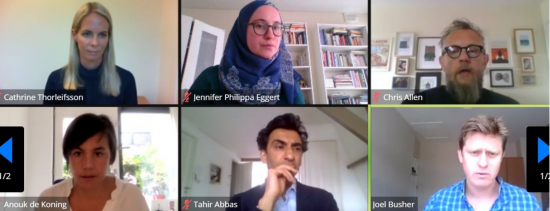
Cathrine Thorleifsson (University of Oslo) opened the floor by stressing the importance of looking at online spaces, such as forums, gaming platforms and social media when trying to understand radicalisation processes. These spaces create an enabling environment for the virtual community to engage in political mobilisation, prompting young individuals to lean towards extremist patterns. The emotional dimension of online radicalisation also needs to be addressed, as offline grievances seem to translate into the online sphere.
There is, in fact, a gap in our understanding of how the online and offline spheres intertwine when it comes to radicalisation processes. DRIVE will attempt to bridge this gap by investigating both spaces.
“Often we only have discourse analyses of far-right discourses online, but we also need to look at the embodied and affective dimensions of online spaces.”
Cathrine Thorleifsson
Jennifer Philippa Eggert (University of Warwick) highlighted the key role of gender in research on political violence and violent extremism. Integrating a gender perspective is pivotal in two ways: first, the research should address how extremist groups instrumentalise gender; second, gender equality should become more integrated into the field of political violence.
According to Eggert, gender plays an important role in shaping the role and directing the actions of extremist groups. It permeates everything extremist groups are and everything they do. The propaganda, recruitment strategies, power structures, and organisation of extremist groups rely heavily on gender stereotypes and gender norms. The DRIVE project seeks to investigate gender dynamics in extremist groups and the role of masculinity, as well as to promote inclusivity and gender equality.
“Sometimes when the researchers want to focus on gender, they end up only looking at women, which is simply not good enough as we cannot understand women alone without looking at men.”
Jennifer Philippa Eggert
Joel Busher (Coventry University) and Chris Allen (University of Leicester) both underlined the challenges of researching extremist groups. Busher addressed the difficulty of integrating these groups and the behaviour the researcher must sometimes adopt in order to get access to data. Allen then added that research on specific groups could lead to their stigmatisation by the public but also to a rejection of the researcher’s work by these very groups. The more a researcher’s work is published and known, the more defiant respondents can be, which can make participant observation an arduous task.
Both speakers mentioned the personal risks that the researchers are exposed to when doing participant observation: they can be perceived as biased, or suffer from online harassment. Nevertheless, they also reminded the audience that there are safe ways of conducting participant observation in extremist groups - for instance by researching emerging groups rather than well-established ones. Despite the risks, this method is of great epistemological importance, as it enables researchers to capture the affective and emotional dimensions of extremism. As DRIVE will resort to participant observation and interviews, a clear ethical framework has been established in order to protect the respondents, communities, and researchers.
For Joel Busher, a self-reflection on the researcher’s position when researching extremism is necessary. Researchers indeed hold responsibilities towards the participants, communities, and wider society. Chris Allen briefly stressed that researchers do not only face risks when conducting fieldwork, but also when their research gains attention through the media, social media, or university websites.
All panellists acknowledged the need for self-reflection and self-criticism when researching the field of political violence and extremism, both on an individual and structural level. Finally, Busher pointed out how uncomfortable one may feel when confronted with extremist comments and the difficulty to balance the need for gathering data and this discomfort. This affective and moral dimension of researching such a sensitive field also needs to be accounted for.
“There is a responsibility towards wider society: how do we give importance to what we’re doing without actually inflating narratives of risks and potentially driving fear and polarization.”
Joel Busher
After the panellists’ presentations, the audience was able to interact with them in a Q&A moderated by Anouk de Koning, who animated the discussion by sharing her insights as an anthropologist. For instance, she pointed out the importance of making academia more diverse to prevent stigmatisation of certain groups and interrogated the role race plays in counter-extremism and counter-terrorism research.
Overall, this first online event paved the way for fruitful discussions and worthwhile reflections on the challenges of researching extremism today that will be crucial throughout the DRIVE project. As pointed out by Tahir Abbas, this research will maintain a critical and grounded perspective because it seeks to challenge the dominant understanding on the way we think about radicalisation.
For some time now, I have been trying to make sense of the process by which a particular representation of the figure of ‘the Muslim’ is intrinsically entangled in Islamist and far right politics.[1] The prevalence of the Muslim ‘other’ in legitimising their identity is known from studies on far right politics. In Islamist politics, 'the Muslim' is central in the legitimising the establishment of a Muslim homeland - the caliphate.[2] What dominant research and policy tends to overlook, however, is how far right and Islamist politics connect beyond language and action.
In other words, research is generally occupied with the political discourse and performances of certain groups and parties without giving sufficient focus to the actual workings of identification. One way to perceive mutuality in more detail is to shift attention from the study of identity to the study of identification. In the study of identity, politics is understood as the formulation of, and interaction between, fixed identities. As an alternative, the study of identification acknowledges that political identities are always relational and co-constituted. In the context of identity politics and extremism, the relational aspect is important because it provides insight into the legitimation, or normalisation of radical political demands.
As researchers, community practitioners and policy-makers, I suggest we take into account the deeper, undisclosed, connection between far right and Islamist politics. In focusing solely on plain language and actions, we risk missing important factors related to the dynamics of political identification. We have to allow for inconsistencies and contradictions, some of which are ingrained in the concepts we use as observers ourselves. In the case of far right and Islamist politics, there is a contradictory alliance between seemingly opposing identities.
One such radical demand is the construction of a state governed by Islamic laws and principles - the caliphate. Rather than arguing such a demand is an Islamist demand only, the caliphate is co-constructed by both Islamist and far right politics. Perceiving mutuality beyond mere interaction between Islamist and far right politics reveals such underlying paradoxes. The far right would never explicitly demand the establishment of the caliphate as the solution to the ‘out of placeness’ of Muslims.
And from what we might conclude from the analysis of Islamist groups such as Daesh, not every form of Islamist politics actively pursues the establishment of the caliphate. The caliphate is rather an imaginative tool - a utopia/dystopia - that functions to legitimise the displacement of Muslims. The possibility of the caliphate is important for the emotive appeal to the discourse of the far right and Islamists. The politics of Daesh, for example, is not necessarily in favour to other Islamist groups that aim to mobilise the Muslim community (the ummah) on the grounds of displacement.
In the context of identity politics and extremism, the relational aspect is important because it provides insight into the legitimation, or normalisation of radical political demands.
The legitimacy of the caliphate, both in far right and Islamist politics, is dependent on the construction of ‘the Muslim’ as one particular - homogeneous - way of being Muslim. ‘The Muslim’ in the politics of the far right is a ‘out of place’, or displaced, figure deprived of a homeland. For the far right, there is no place for ‘the Muslim’ beyond the structure of the caliphate. The only way of being Muslim is to abide by the all-encompassing way of life, or ideology, of Islam. Hence the reasoning that ‘the Muslim’ is irreconciable with secular and liberal culture.
And because there is only one way of being authentically Muslim, the far right ultimately deny the possibility of so-called progressive or liberal Islam. Similarly, the ‘out of placeness’ of ‘the Muslim’ is pivotal to the legitimacy of Islamist politics. Their displacement is an inevitable outcome of the dominant culture and politics of assimilation of the West. The structural eradication of Muslims can only be reversed through the establishment of the caliphate - the place of origin of the ummah.
To merely conceive them as polarised identities overlooks the symbiosis, or mutuality, of such a construction. After all, far right and Islamist politics aim to construct a frontier between ‘the Muslim’ and ‘the secular’. Yet, beyond the frontier there exists a mutual relationship that is paramount to the longevity of both forms of (extremist) politics. And although such a relationship has recently been captured in concepts such as ‘cumulative extremism’ and ‘reciprocal radicalisation’, I propose we need to go beyond the binary to perceive the so-called third position.
The third position refers to the context far right and Islamist extremism are subjected to and, through their mutual practice, aim to change. While generally understood as the outcome of far right politics alone, the ‘mainstreaming’ of the political right is a result of the interaction between oppositions. Without the lens of complexity, it is easy to attribute such mainstreaming entirely to the far right.
However, by taking into account the relational dynamics embedded in the optimal functioning of the far right, the critical role of Islamist politics in the mainstreaming of the political right is rendered visible. The third position is the synthesis - the coming together - of far right and Islamist politics. It is a particular perspective that privileges perceiving relations and its very (contingent) implications. Thus, in occupying a third position, context is crucial because the extremist identities we analyse not only derive from it, but also seek to change it.
[1] Please note I acknowledge recent discussions on the ambiguity of these categories. In speaking of far right and Islamist politics here, I refer to the variant that is overdetermined populist in articulation and identification.
[2] The Muslim in Islamist politics encapsulated both the Muslim ‘self’ as the authentic subject, and the Muslim ‘other’ as the corrupted subject (e.g. the progressive or liberal Muslim).